{{ 'fb_in_app_browser_popup.desc' | translate }} {{ 'fb_in_app_browser_popup.copy_link' | translate }}
{{ 'in_app_browser_popup.desc' | translate }}
{{ childProduct.title_translations | translateModel }}
{{ getChildVariationShorthand(childProduct.child_variation) }}
{{ getSelectedItemDetail(selectedChildProduct, item).childProductName }} x {{ selectedChildProduct.quantity || 1 }}
{{ getSelectedItemDetail(selectedChildProduct, item).childVariationName }}
Misty hair color without bleach? Hairstylist reveals the magic of “Bath Dye”
In recent years, “misty hair color” has become a major trend—moving away from bold, saturated tones toward soft, translucent shades with natural transitions. Terms like “bath dye” and “misty tone” have been popping up in online discussions, leaving many curious about what they actually mean. In this article, we invited Cherry, a stylist from Nc2 Hair Salon, to break down the concepts behind bath dye and misty tones, who they’re best suited for, and real-life examples—helping you understand the key techniques behind these sophisticated hair colors.
Hairstylist at Nc2 Hair Salon - Cherry
Catalogue
I. What are “Bath Dye” and “Misty Tone” hair colors?
II. Who Is Bath Dye best for? Must-read tips!
III. Bath Dye vs. Traditional Coloring vs. Misty Tone – What’s the difference?
IV. Featured case studies: Bath Dye & Misty Tone
1. Red-brown to neutral mocha (Misty Tone)
2. Severely damaged bleached hair successfully colored (Bath Dye)
What are “Bath Dye” and “Misty Tone” hair colors?
Cherry - Bath Dye work
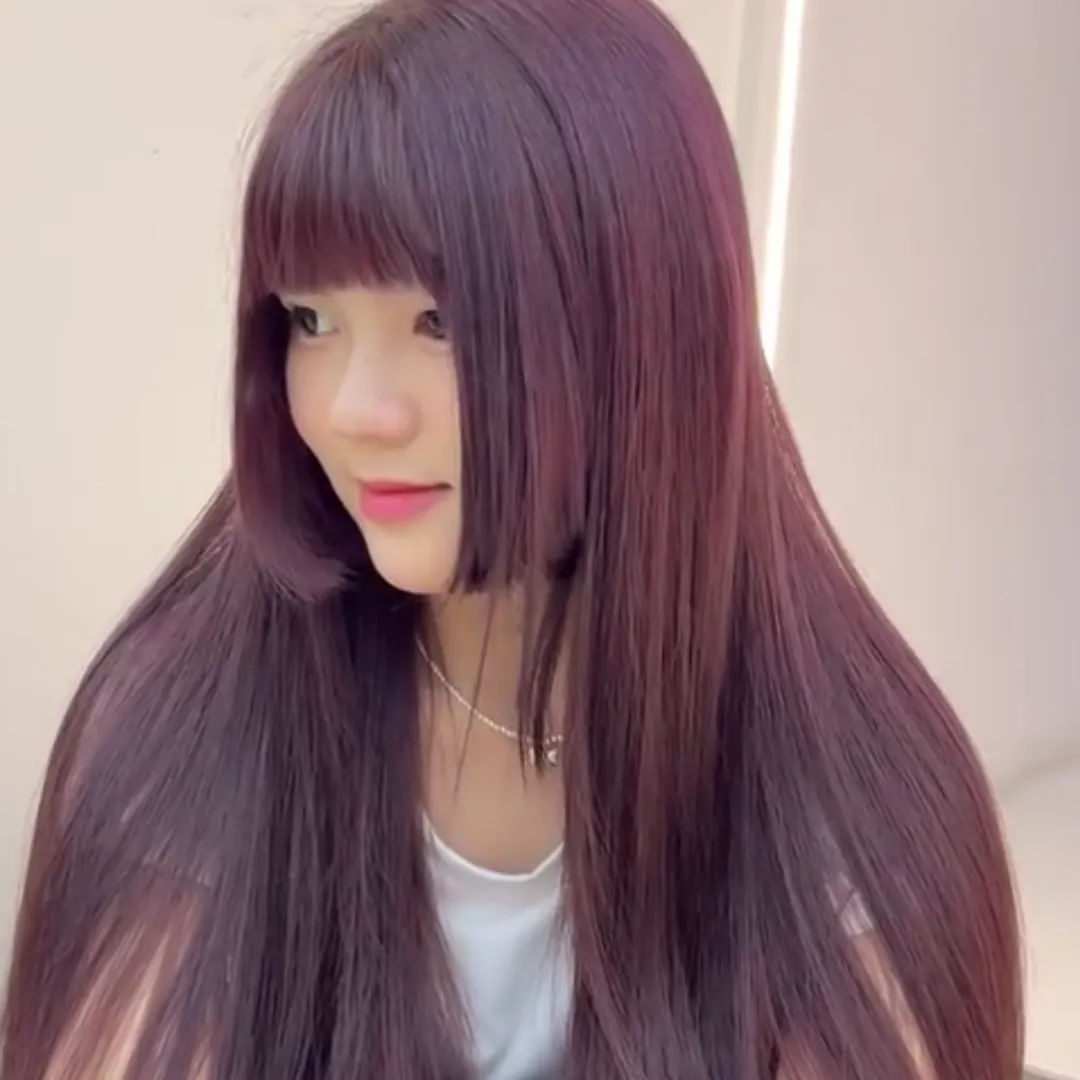
Bath dye is a two-step hair coloring technique. It begins by adjusting and lightening the existing base color—often involving pigment correction—followed by the actual color application. This approach helps create a clean, sheer foundation, allowing the final color to appear more even and soft. In contrast, misty tone coloring is a one-step process performed entirely at the styling chair. It's typically used for clients who already have a pre-colored base, focusing on directly layering misty hues to achieve a soft, muted effect. The process is quick and efficient, making it ideal for time-conscious clients seeking a refined finish.
Who Is Bath Dye best for? Must-read tips!
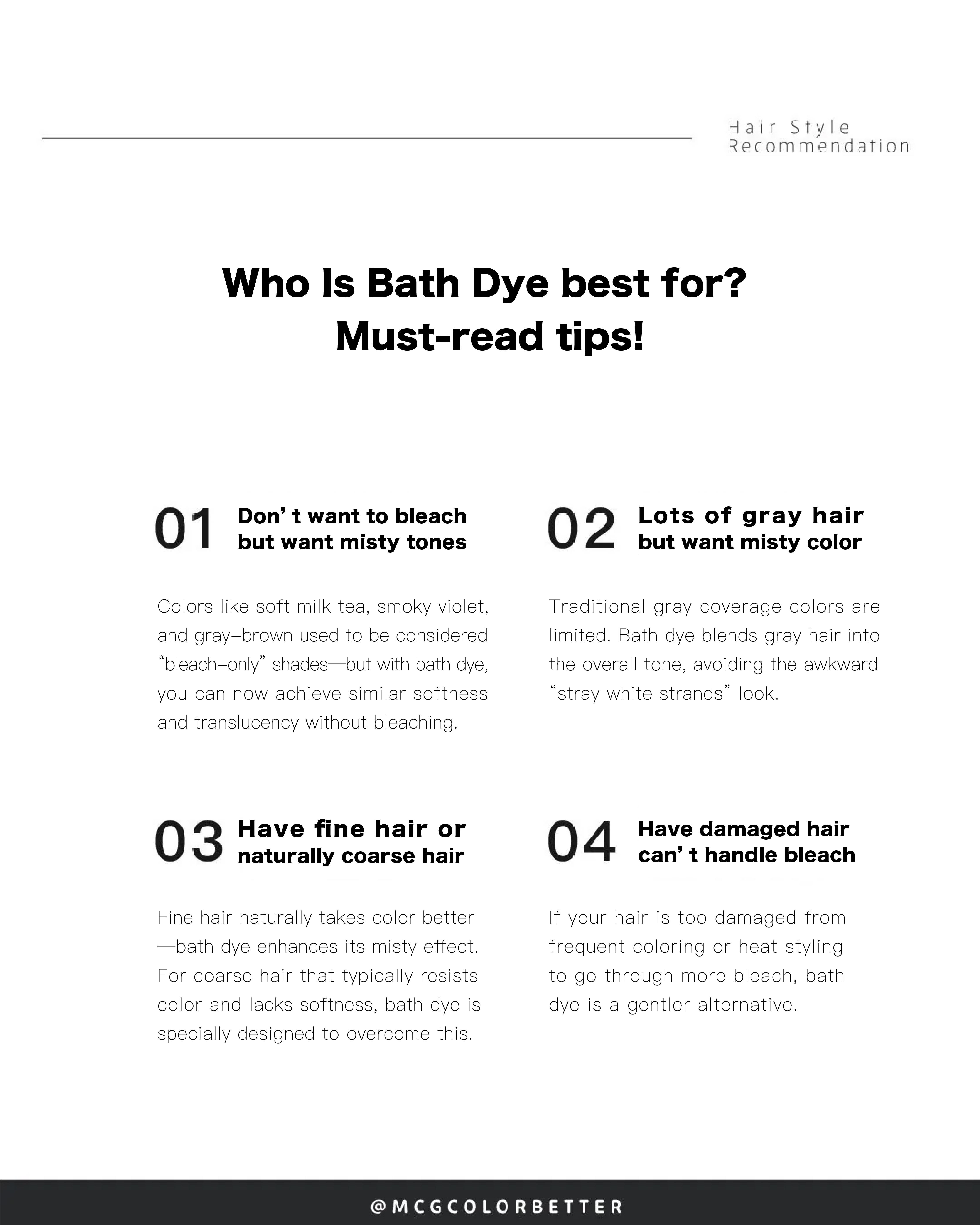
Want to change your hair color but don’t know where to start? Cherry shares four common situations—if any of these sound like you, then bath dye might just be your perfect hair color solution!
Don’t want to bleach but still dream of misty tones?
Colors like soft milk tea, smoky violet, and gray-brown used to be considered “bleach-only” shades—but with bath dye, you can now achieve similar softness and translucency without bleaching.
Have a high percentage of gray hair but want misty colors?
Traditional gray coverage colors are limited. Bath dye blends gray hair into the overall tone, avoiding the awkward “stray white strands” look. Cherry explains that the process lightens the base first, allowing gray and dark strands to merge seamlessly for an even finish.
Have fine or naturally coarse hair?
Fine hair naturally takes color better—bath dye enhances its misty effect and transparency. For coarse, stiff hair that typically resists color and lacks softness, bath dye is specially designed to overcome this. It gives those with thick strands more color options that standard dyes can’t achieve.
Have damaged hair that can’t handle bleach?
If your hair is too damaged from frequent coloring or heat styling to go through more bleach, bath dye is a gentler alternative. It delivers a misty, dimensional look without further compromising hair health.
Bath Dye vs. Traditional Coloring vs. Misty Tone – What’s the difference?
Misty tone work by Cherry
Bath dye uses a two-step process—first correcting the base color, then applying the final shade—to achieve a clean, luminous misty tone. While it doesn’t require bleaching, it still delivers brightness and translucency similar to post-bleach results. Although the process takes about an hour longer than regular coloring, the color longevity is comparable.
Misty tone coloring is a quicker method ideal for clients with a pre-colored base and stable hair condition. It allows for one-step color application directly at the chair. According to Cherry, the process can be completed in as little as 45 minutes, making it perfect for those seeking a fast color change or a more efficient salon visit. However, it offers slightly less translucency and blending compared to bath dye.
As for traditional hair coloring, while it's also quick to apply, it struggles with uneven patches—especially in hair with multiple color levels. It lacks the clarity and smooth finish that bath dye delivers. In summary: For clients who value refined color transitions and high visual clarity, bath dye is the top choice. For those wanting a quick refresh or simple color maintenance, misty tone coloring or traditional dye are more practical options.
Featured case studies: Bath Dye & Misty Tone
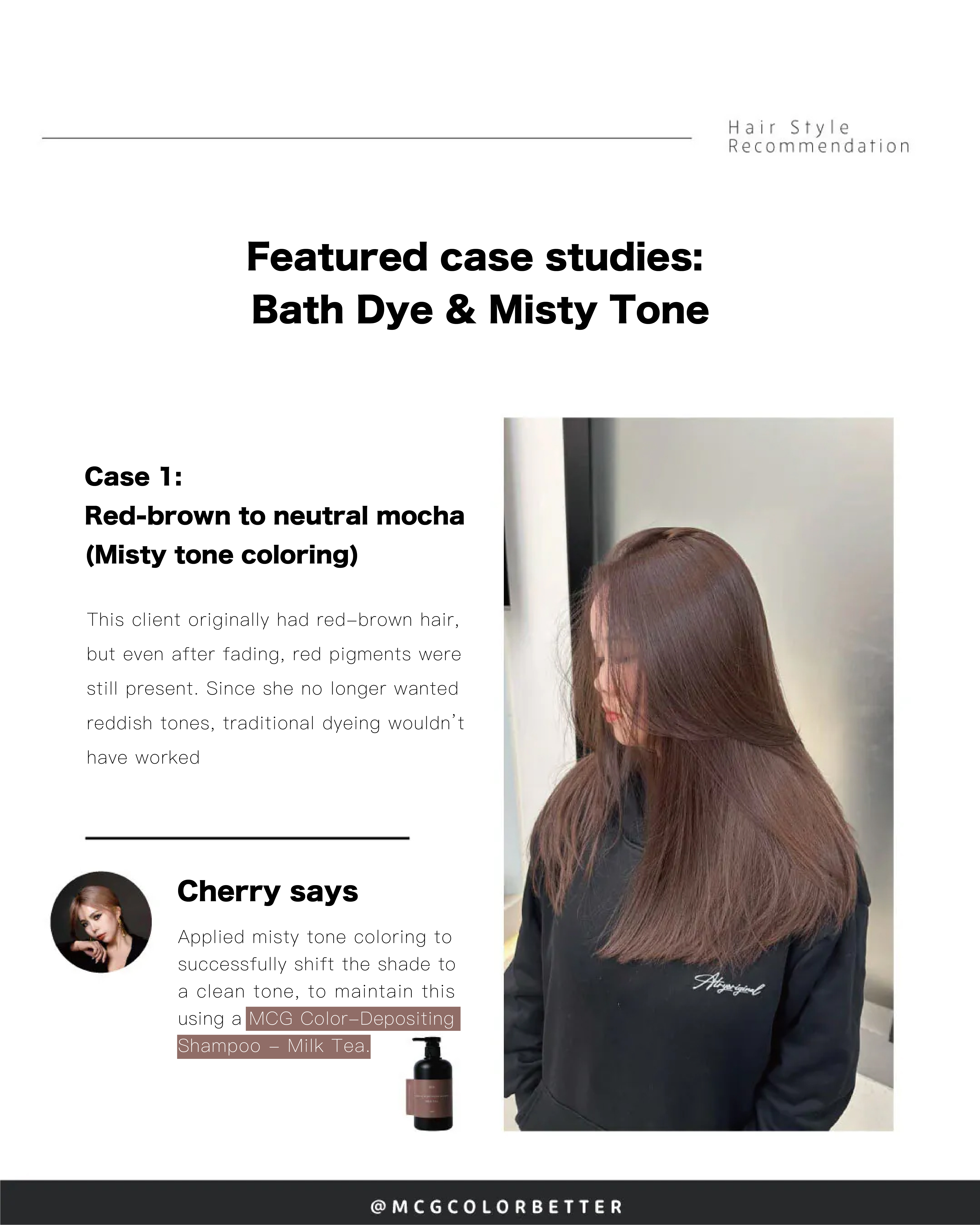
Case 1: Red-brown to neutral mocha (Misty tone coloring)
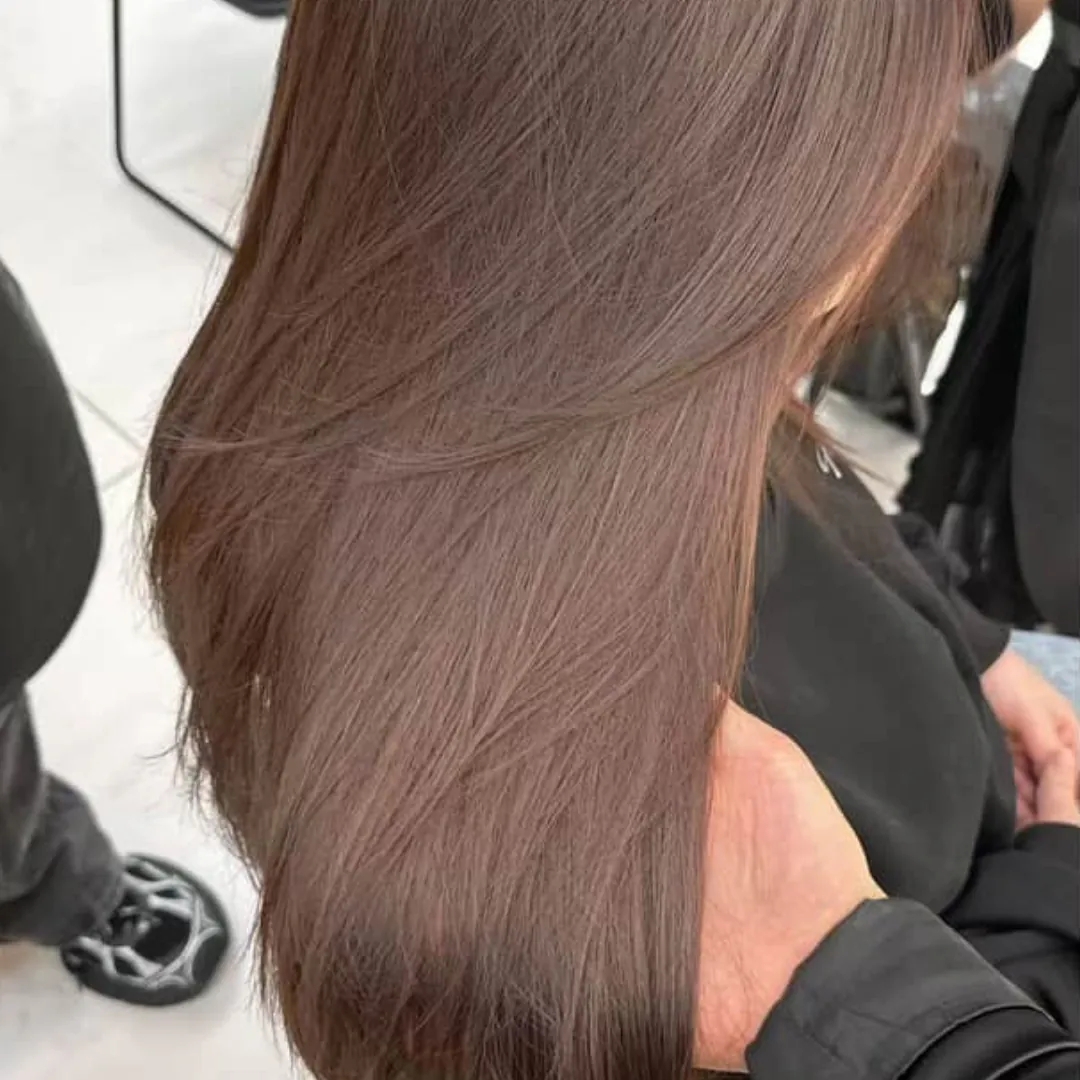
This client originally had red-brown hair, but even after fading, red pigments were still present. Since she no longer wanted reddish tones, traditional dyeing wouldn’t have worked—it would have left behind stubborn red hues and uneven patches, resulting in a muddy finish. Cherry applied color theory and used misty tone coloring to successfully shift the shade to a clean, neutral mocha. To maintain this look, she recommends using a MCG Color-Depositing Shampoo - Milk Tea.
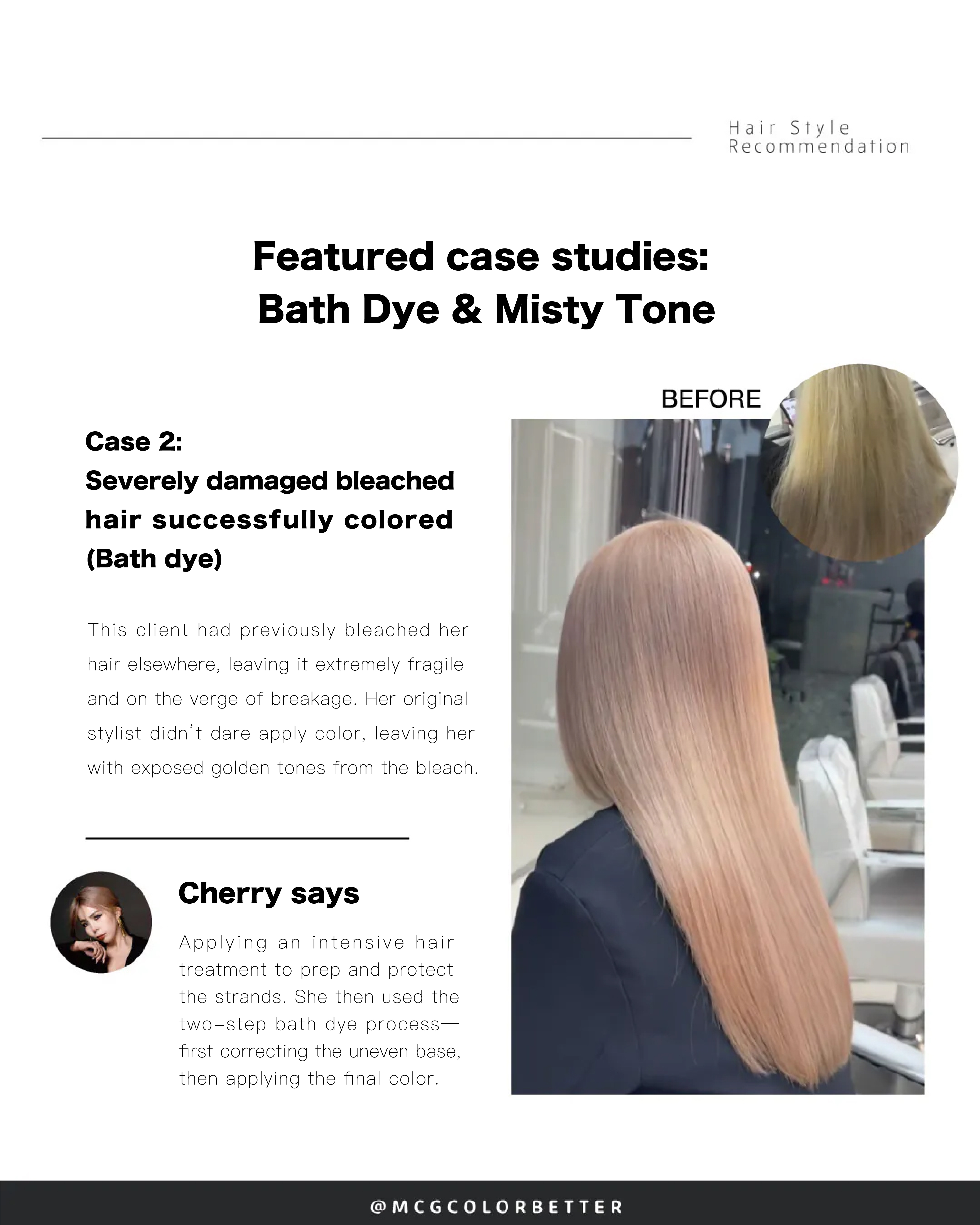
Case 2: Severely damaged bleached hair successfully colored (Bath dye)
This client had previously bleached her hair elsewhere, leaving it extremely fragile and on the verge of breakage. Her original stylist didn’t dare apply color, leaving her with exposed golden tones from the bleach. However, with an upcoming trip, the client turned to Cherry, known for her expertise in bath dye. Cherry began by applying an intensive hair treatment to prep and protect the strands. She then used the two-step bath dye process—first correcting the uneven base, then applying the final color. The result: a soft, misty-toned finish that transformed what was once deemed “un-colorable” into a smooth, beautifully blended look.
FAQs about Bath Dye and Misty Tone
Q1: My hair has stubborn red or orange tones. Can I still dye it misty?
A: If you use regular dyeing methods, the result often looks muddy or dull due to leftover pigment and uneven undertones. In cases like this, Cherry recommends using bath dye first to correct the base, then applying the misty tone color—this ensures a clean, layered, and translucent finish.
Q2: Can gray hair be dyed into misty colors? I thought only black or dark brown was possible.
A: Many clients with gray hair think their color options are limited, but Cherry uses bath dye to blend grays seamlessly into the overall tone. Shades like smoky violet or gray-brown are totally doable—without awkward streaks of visible gray.
Q3: On Dcard, people often ask, “Why does bath-dyed hair look so bright? Is it a special product or just flat-ironed?”
A: "It's not just about flat-ironing!" Cherry laughs and explains the concept: "It’s like watercolor art—you use a mix of primary and supporting tones. By first lightening the uneven base, you remove patchy color blocks. That’s what makes the final result look so sheer and misty."
Recommended Taipei hair colorist: Cherry
Cherry has been in the hair industry for 15 years. Coming from a family of hairstylists, she was encouraged by her mother to enter the field—and unexpectedly, it turned into a long-term career. She laughs, “What’s kept me going is continuous learning. I never let myself get bored. Every so often, I travel abroad to teach, attend classes, or explore, which keeps my passion for this job alive.”
When asked about her most fulfilling moments, she says, “It’s when I fix hair that’s been damaged elsewhere—like over-processed perms or failed dyes. If other stylists are afraid to touch it, I’ll take it on and help the client recover their hair. That sense of challenge and appreciation is incredibly powerful.” Cherry’s basic haircut starts at $800, regular coloring from $2,500, and standard perms from $3,000. Book a bath dye service with Cherry and enjoy one free color-depositing shampoo session within a month—so your color lasts longer and stays vibrant. Click below for Cherry’s stylist info and book your appointment now!
Stylist information
Una x nc2 – Cherry
IG: @nc2.cherry
Line@ (Booking): @nc2.cherry
Locations:
New Taipei Tucheng Haishan Station Branch: No. 33, Alley 6, Lane 21, Yusheng Rd., Tucheng District, New Taipei City
Taipei Gongguan Branch: 2F-1, No. 278, Section 3, Roosevelt Rd., Zhongzheng District, Taipei City
For color-treated hair, it's recommended to use color-protecting shampoo and color-depositing shampoo in your daily routine.
Color-protecting shampoo helps slow down the fading process, allowing your hair color to fade more naturally and evenly. Color-depositing shampoo works by replenishing pigment within the hair, restoring vibrancy and shine to your color.
◆ Color-protecting shampoo
◆ Developed and manufactured in Japan, imported as original
◆ Contains antioxidant ingredient SOD to slow down color fading
◆ Sakura extract enhances scalp hydration and soothes discomfort after bleaching and dyeing
◆ Color-depositing shampoo
◆ Available in 6 cool and warm shades, plus a special anti-brass purple shampoo
◆ Ideal for maintaining bleached or color-treated hair and refreshing faded tones
◆ Corrects unwanted tones like green or yellow
◆ 4 Key Features: Stain-free, non-patchy, easy to lather evenly, and leaves hair smooth
Locks in hair color while cleansing like a regular shampoo—leaving your hair soft, nourished, and vibrant without dryness. It’s more than just color care—it’s total hair care.
Color-treated hair tends to lose more moisture and protein, making it more prone to damage. That’s why using a hair mask after shampooing is highly recommended. Hair masks are rich in deep hydration and protein-replenishing ingredients that help restore elasticity and reinforce hair structure.
MEM Empower Hair Mask:
Ideal for severely damaged hair (e.g., bleached 3 or more times). Enriched with Japanese platinum nano-capsules, it delivers essential moisture and nutrients deep into the hair.
Magic Jungle Hair Mask:
Designed for moderately damaged hair (e.g., not bleached or bleached 1–2 times). Packed with protein-rich ingredients, it helps rebuild hair structure and strengthen each strand.
◆ Developed and manufactured in Japan, imported as original product
◆ Contains platinum nano-composite capsules with small molecules for better absorption
◆ Repairs and nourishes the CMC (cell membrane complex) pathways
◆ Suitable for bleached, permed, and severely damaged hair
◆ Salon-grade hair mask
◆ Developed by professional hair stylists
◆ Lightweight, non-greasy texture for easy absorption
◆ Strengthens hair and enhances elasticity
Heat damage from styling tools like blow dryers, curling irons, and flat irons can cause structural damage to the hair, leading to weakened strands, loss of elasticity, split ends, and breakage.
"MEM Empower Hair Oil” is ideal for severely damaged hair due to bleaching, coloring, or perming. It contains dual-type amino acids that lock in essential moisture and reduce frizz.
“Cinderella Shine Hair Oil” is suitable for normal hair types. It’s enriched with golden silk oil and high-concentration proteins to deliver essential nutrients for healthier, shinier hair.
◆ Suitable for bleached, permed, and severely damaged hair
◆ Leave-in hair treatment
◆ Developed and manufactured in Japan, imported as original product
◆ Contains hydrolyzed keratin to maintain scalp moisture and fiber integrity, nourishing the scalp, enhancing hair elasticity, and reducing breakage
◆ Suitable for normal and damaged hair
◆ Infused with Moroccan argan oil to deeply nourish and enhance shine
◆ Golden silk oil protects damaged hair and boosts elasticity with excellent spreadability
◆ Solomon’s seal oil is rich in vitamins to lock in moisture and nutrients
◆ Crambe abyssinica (Abyssinian seed) oil, high in vitamin E, brightens hair, reduces frizz, and prevents unwanted waves